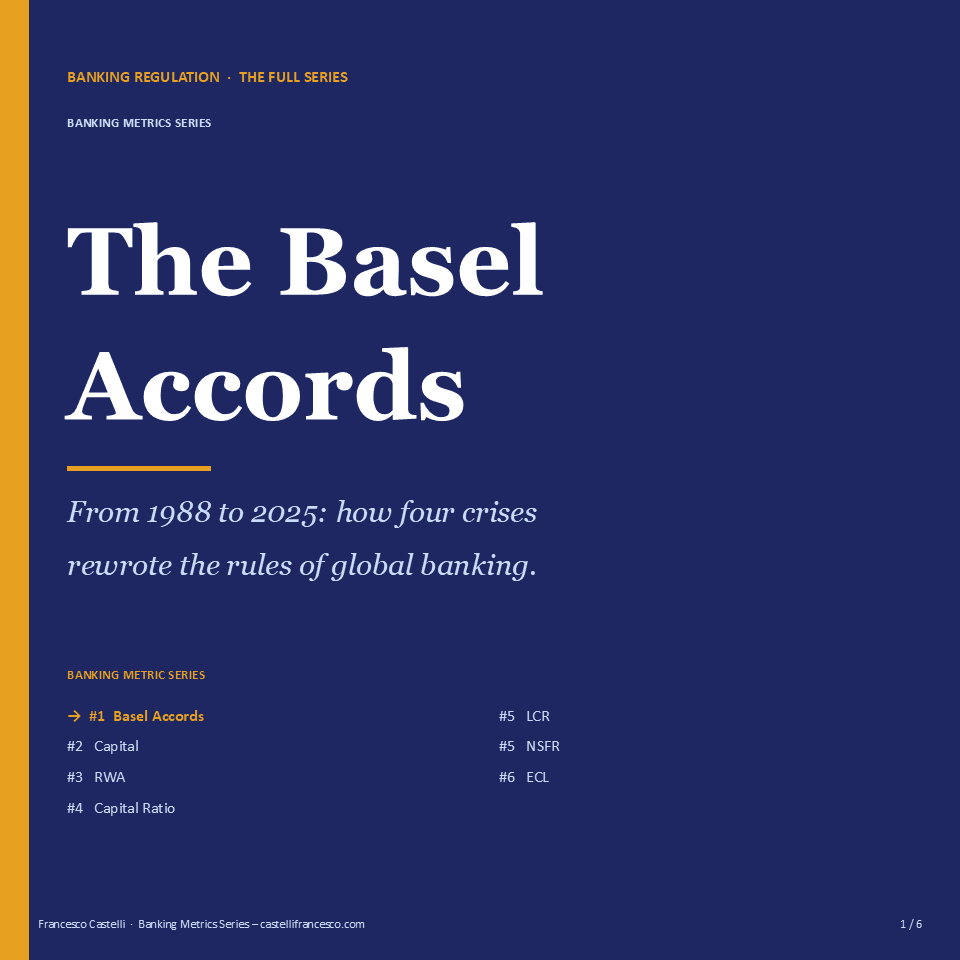
01. The Basel Accords: from 1988 to 2025
From the 1988 Capital Accord to the 2017 Output Floor: four decades of reform driven by crises, gaps, and the effort to make global banking safer.
#BankingRegulation #BaselIII #BankCapital #RiskManagement #BankingMetricsSeries
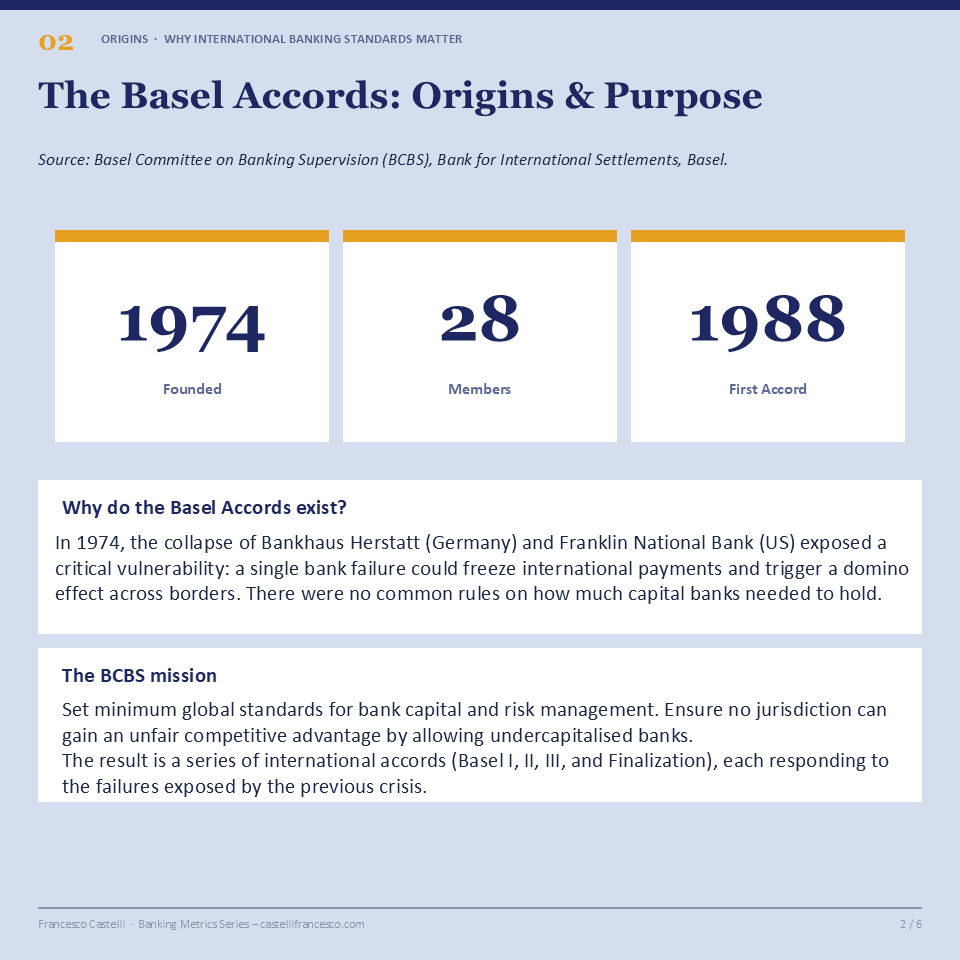
Every Basel Accord is a fix to a problem the previous version did not see coming.
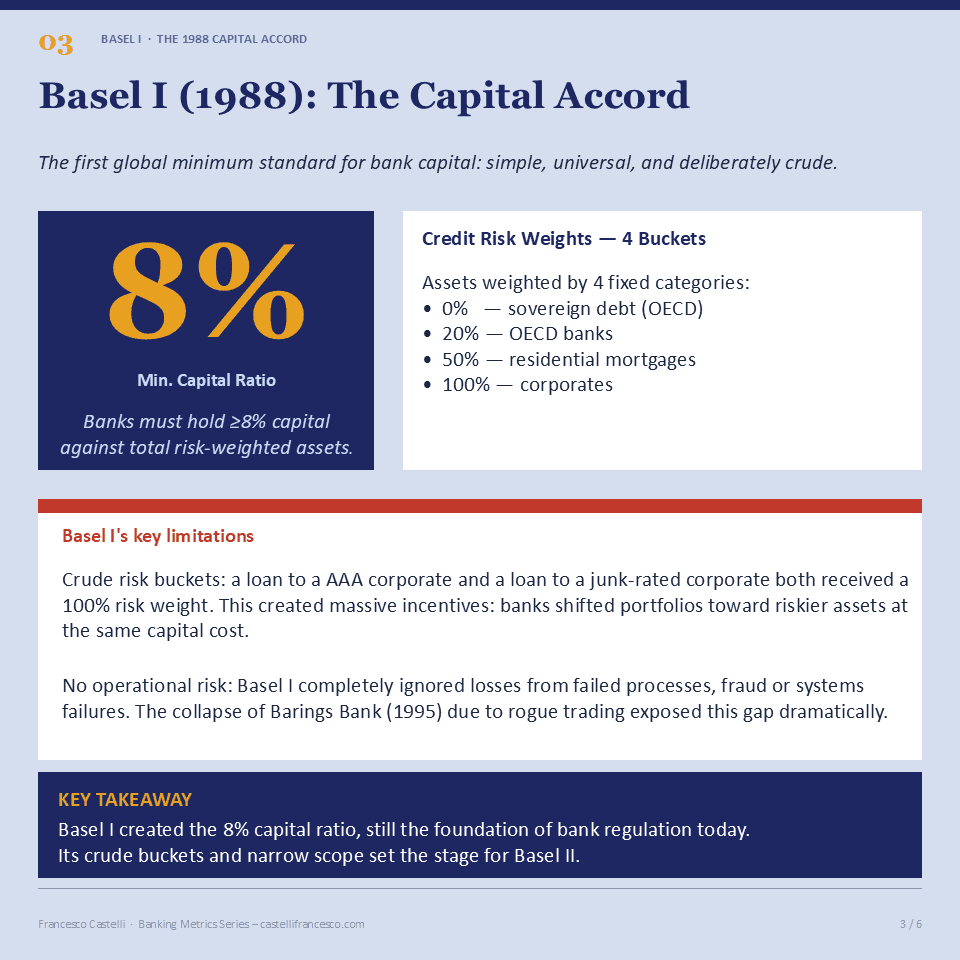
In 1988, Basel I introduced a single number: 8% minimum capital ratio. Simple, universal, deliberately crude and without risk differentiation. It worked until banks filled their balance sheet with non performing loans.
In 2004, Basel II added the three Pillars and internal models (IRB) to estimate their own parameters.
In 2010, Basel III rebuilt the framework after the default of Lehman Brothers. Common Equity Tier 1 became the gold standard. Liquidity Coverage Ratio and Net Stable Funding Ratio were the first global liquidity rules.
In 2017, Basel IV finalised the loop. The Output Floor caps how much banks can save RWAs through internal models. This is now live since January 2025.
Each step was a response to a crisis or a flaw in the previous design. Reading them in sequence is the best way to understand modern banking regulation.
Swipe through for the full breakdown 👇