02. Available Own Funds: CET1, AT1, Tier 2
Same balance sheet. Three different capital ratios. Here's why.
#BankingRegulation #BaselIII #BankCapital #RiskManagement #BankingMetricsSeries
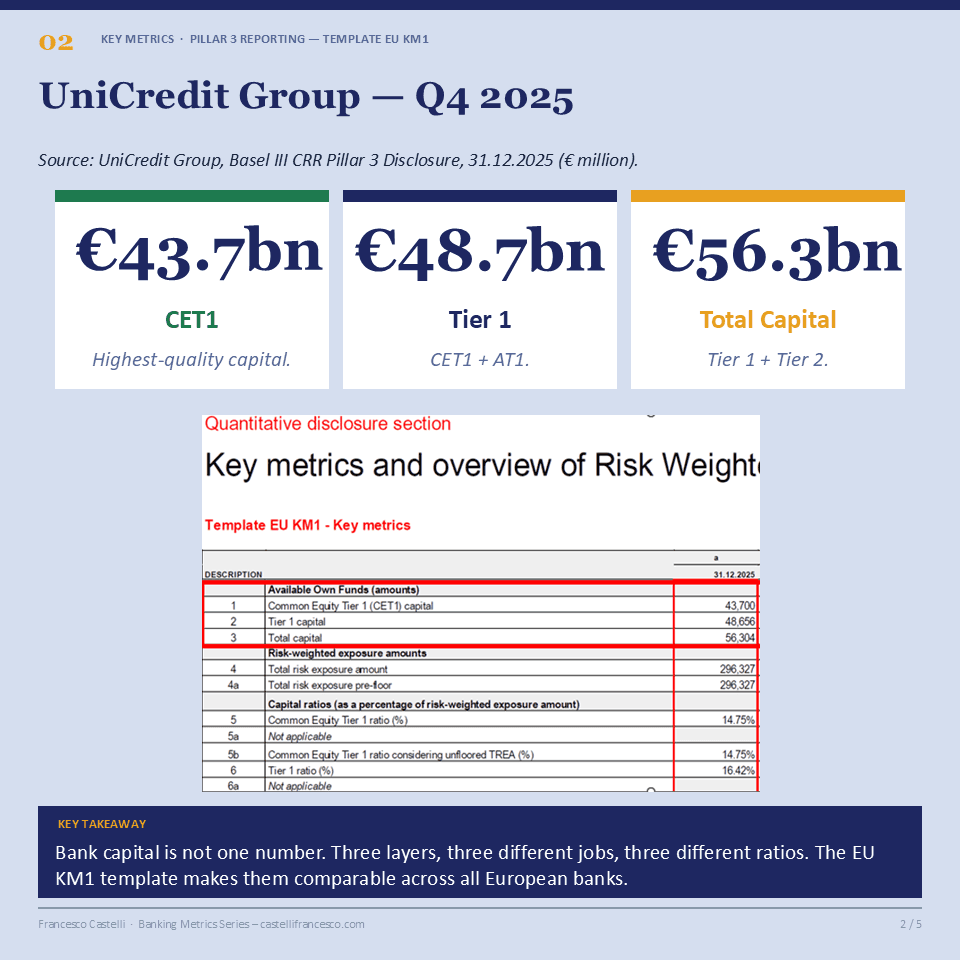
Bank capital isn't one number — it's three layers, each with a different job in absorbing losses.
Common Equity Tier 1 (CET1) is the part that matters most: Ordinary equity, retained earnings, and Other Comprehensive Income, minus deductions like Deferred Tax Assets and own shareholdings. Always available, and first to absorb losses while the bank is alive.
Additional Tier 1 (AT1) is the contingent layer. Convertible bonds that flip from debt to equity when CET1 falls below a contractual trigger. Coupons can be cancelled at the bank's discretion without triggering default.
Tier 2 is subordinated debt. It absorbs losses only at the gone-concern stage: resolution or liquidation, when the bank is no longer viable.
The hierarchy matters because the ratio depends on which layer you count: CET1 ratio, Tier 1 ratio, Total Capital ratio. One balance sheet, three different numbers — and regulators set a different minimum for each.
Swipe through for the full breakdown 👇