06. IFRS 9 ECL: from incurred to expected loss
IFRS 9 ECL: from incurred to expected loss
#BankingRegulation #IFRS9 #ECL #CreditRisk #RiskManagement #BankingMetricsSeries
Before 2018, banks waited for the customer to default before booking a loss.
Under IAS 39, you needed objective evidence of impairment. A missed payment, a restructuring, a default event. In good years, banks delayed recognition. Provisions stayed low, profits stayed high. When the cycle turned, provisions surged all at once.
IFRS 9 ended that. Since January 2018, banks must estimate losses before they happen.
The formula: ECL = PD x LGD x EAD, weighted across multiple macro scenarios.
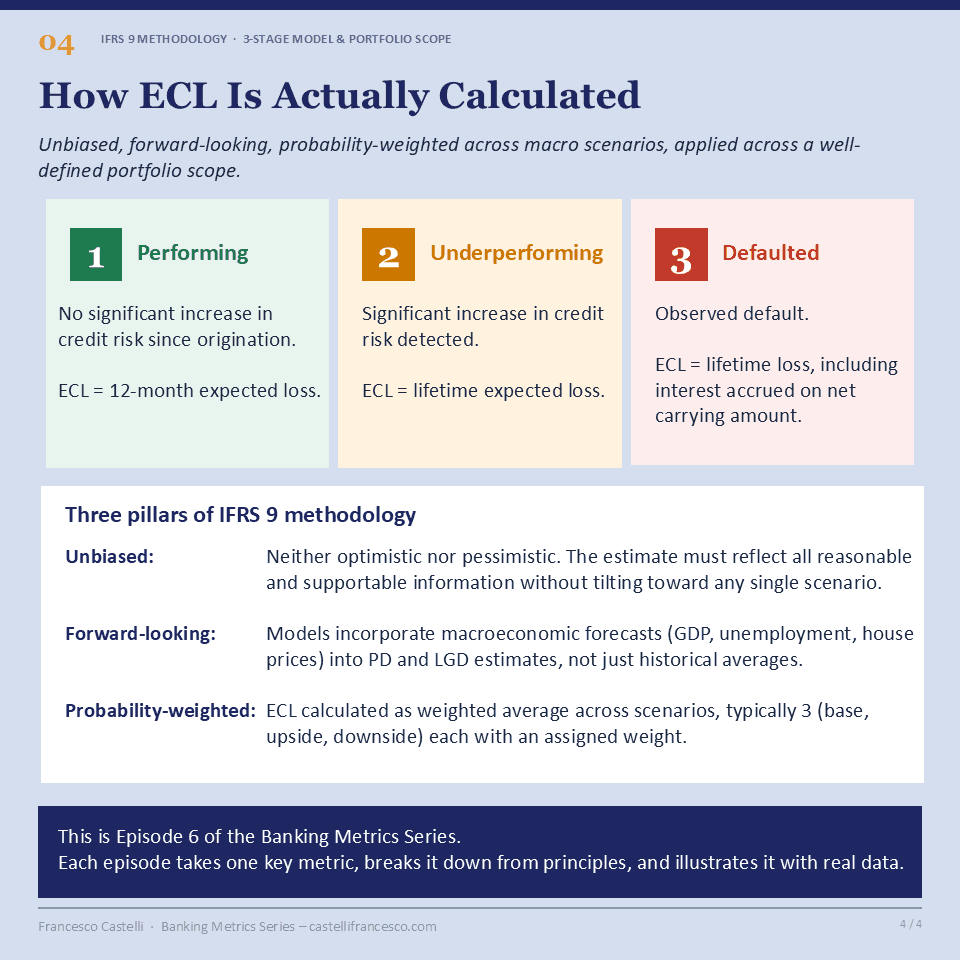
The 3-Stage model decides how much loss to book:
Stage 1 (Performing): no significant increase in credit risk. Book ECL covering default in one-year horizon.
Stage 2 (Performing): credit risk has increased significantly. Book ECL covering default in the full contract horizon.
Stage 3 (Defaulted): observed default. Book specific provisions, case by case basis.
Stage transitions hit the P&L immediately. A wave of Stage 1 to Stage 2 migrations during a downturn can shift hundreds of millions in provisions in a single quarter.
The COVID-19 shock was the first live test. Banks raised provisions in early 2020 and reversed them as the recovery played out.
Full mechanics in the carousel 👇